

Athletes continually push their bodies to the limit, seeking to achieve new heights of strength, speed, and endurance. The process of improvement and adaptation in response to training is a fundamental concept in athletics. While hard training undoubtedly stimulates these adaptive processes, a lesser-known truth is that the actual adaptation occurs during the recovery phase, not during training itself. This crucial aspect of athletic performance highlights the importance of recovery in maximizing an athlete’s potential.
Sometimes, the difference between a good athlete and a great athlete is that a great athlete knows the importance of recovery. While many athletes are eager to push their limits during training, it’s those who understand that recovery is an integral part of the process who ultimately excel. These athletes appreciate that recovery isn’t a sign of weakness but a strategic move that allows their bodies to adapt, grow, and perform at peak levels.
Great athletes not only embrace recovery but also make it a central part of their training regimen. They listen to their bodies, recognizing when rest is just as valuable as a challenging workout. They understand that recovery isn’t just about physical recuperation; it’s also about mental rejuvenation. A clear, focused mind is essential for making split-second decisions on the field or in the heat of competition.
Moreover, great athletes recognize that consistency in recovery practices leads to long-term success. They prioritize sleep, maintain a balanced diet, and implement various recovery techniques consistently. By doing so, they reduce the risk of burnout, injury, and the dreaded plateau in performance.
The Training-Stimulated Response
When athletes engage in rigorous training regimens, they subject their bodies to stress and strain. These training sessions create a stimulus that triggers a series of physiological responses aimed at adapting the body to meet the demands placed upon it. For instance, resistance training stimulates muscle fibers to become stronger and more efficient, while cardiovascular workouts improve the efficiency of the cardiovascular system.
However, it’s essential to recognize that the benefits of training are not experienced during the training session itself. Instead, the real magic happens during the post-exercise recovery period.
The Recovery Phase: Where Adaptation Occurs
The recovery phase is where the body begins to repair and adapt to the training stimulus. During this time, several key processes take place:
Muscle Repair and Growth: After an intense workout, muscles may experience tiny tears and damage. During the recovery phase, the body repairs these muscles, making them stronger and more resilient than before. This process, known as muscle hypertrophy, leads to increased muscle size and strength.
Energy Restoration: During exercise, the body depletes its energy stores, such as glycogen. In the recovery phase, it replenishes these stores, ensuring that the athlete has the necessary energy for future workouts.
Neuromuscular Adaptation: Training enhances the connection between the nervous system and muscles. Recovery allows this connection to become more efficient, resulting in improved coordination and movement patterns.
Hormonal Balance: Intense training can disrupt hormonal balance in the body. Adequate recovery time helps restore hormonal equilibrium, which is crucial for muscle growth, recovery, and overall well-being.
Central Nervous System Recovery: The central nervous system, which controls muscle contractions and coordination, can become fatigued during training. Recovery allows this system to recharge, improving an athlete’s overall performance.
Individual Variability in Recovery
While recovery is a universal necessity for athletes, it’s important to acknowledge that individuals vary in their ability to recover. Factors such as age, genetics, sleep quality, nutrition, and stress levels all play a role in an athlete’s recovery rate. Some athletes may require more extended periods of recovery between intense sessions, while others may bounce back more quickly.
Strategies for Optimizing Recovery
To maximize the benefits of the recovery phase, athletes can employ various strategies:
Quality Sleep: Adequate and restful sleep is crucial for recovery. Aim for 7-9 hours of quality sleep per night to support muscle repair and hormone regulation.
Nutrition: Proper nutrition, including a balance of macronutrients and micronutrients, aids in muscle repair and energy replenishment. Consider working with a sports nutritionist to develop a personalized nutrition plan.
Active Recovery: Light, low-intensity activities like stretching, yoga, or swimming can promote blood flow and aid in recovery.
Hydration: Staying adequately hydrated is essential for muscle function and overall health. Drink plenty of water throughout the day, and consider replenishing electrolytes after intense workouts.
Stress Management: High stress levels can impede recovery. Incorporate relaxation techniques such as meditation, deep breathing, or mindfulness practices into your routine.
Conclusion
Hard training is undeniably essential for athletic improvement, but it’s crucial to recognize that the actual adaptation occurs during the recovery phase. Athletes who prioritize and optimize their recovery will experience more significant gains in strength, endurance, and overall performance. Understanding the critical role that recovery plays in athletic development can help athletes of all levels reach their full potential while minimizing the risk of overtraining and injury. Sometimes, the difference between a good athlete and a great athlete lies in the wisdom to embrace the power of recovery as an integral part of the journey toward excellence.
Related Articles
- Survivorship Bias, Genetics, and Why Most Training Programs Fail
 Most people are training for someone else’s results. They find an athlete they admire, study what that person does, and build their training around it… Read more: Survivorship Bias, Genetics, and Why Most Training Programs Fail
 - The Role Environment and Equipment Play in Becoming a Great Strongman
 Great strongman athletes are not built through programming alone. They are developed in environments that support the demands of the sport and with equipment that… Read more: The Role Environment and Equipment Play in Becoming a Great Strongman
 - Strongman Coaching and Programming Availability
 Strongman training is most effective when it moves beyond random workouts and into structured progression. Many strongman gyms provide coaching and programming designed to help… Read more: Strongman Coaching and Programming Availability
 - Partial vs. Full Range of Motion for Muscle Development
 Most lifters are taught one rule early on: use a full range of motion on every exercise. And for a long time, that was treated… Read more: Partial vs. Full Range of Motion for Muscle Development
 - Getting Started with Strongman Coaching in San Diego
 Starting strongman coaching begins with understanding where you are now and where you want to go. Every athlete enters the sport with a different background,… Read more: Getting Started with Strongman Coaching in San Diego
 - Connection to Strongman Competitions and Events
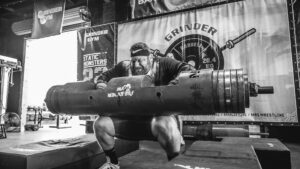 Strongman gyms are more than training facilities. They are preparation grounds for competition and athlete development. The same space used for daily training is often… Read more: Connection to Strongman Competitions and Events
 - Accessory and Supplemental Work for Powerlifting
 This Isn’t Extra Work — It’s Targeted Work A lot of lifters treat accessory work like filler. Something you do at the end of the… Read more: Accessory and Supplemental Work for Powerlifting
 - Reactive Strength vs. Agile Strength: Where Speed Meets Control
 Strength isn’t just about how much force you can produce. It’s about how well you can use it when it matters. Most lifters spend their… Read more: Reactive Strength vs. Agile Strength: Where Speed Meets Control
 - What Strongman Coaching Involves
 Strongman coaching is built around more than just getting stronger. It combines programming, technical development, and performance planning tailored specifically to the demands of the… Read more: What Strongman Coaching Involves
 - Strongman Axle Press: Strategies for Improving Overhead Strength
 The axle press is one of the most technical and humbling events in strongman. It looks like a simple overhead lift—until you grip a thick,… Read more: Strongman Axle Press: Strategies for Improving Overhead Strength
 - Strongman Training Environment and Community
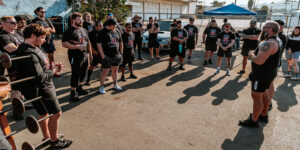 A strongman gym is built around shared effort and performance. It is not a place where people train in isolation. It is a space where… Read more: Strongman Training Environment and Community
 - Strongman Stone Loading: Increasing Efficiency and Power
 Stone loading is one of the most iconic and technically demanding events in strongman. On the surface, it looks simple. Pick up a round, heavy,… Read more: Strongman Stone Loading: Increasing Efficiency and Power
 - Neural Output in Strength Training
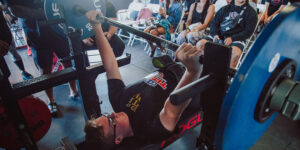 Muscle and connective tissue form the structure of strength.The nervous system determines how much of that strength can actually be used. A lifter may possess… Read more: Neural Output in Strength Training
 - The Importance of Mental Toughness in Strongman Training
 Strongman is as much a mental sport as it is a physical one.Raw strength might get you to the start line, but mental toughness is… Read more: The Importance of Mental Toughness in Strongman Training
 - Best Strongman Equipment for Home Gyms: A Comprehensive Review
 Strongman training builds functional strength, grip endurance, core stability, and mental toughness in a way few training styles can match. Traditionally, it required a full… Read more: Best Strongman Equipment for Home Gyms: A Comprehensive Review
 - Tendons Respond To Strain Duration, Not Just Load
 Tendons adapt primarily to mechanical strain applied over a meaningful duration. When resistance is applied to a muscle, the resulting force travels through the tendon… Read more: Tendons Respond To Strain Duration, Not Just Load
 - As a Beginner, What’s the Most Important Thing to Start With?
 A recent Facebook thread asked a straightforward question: “As a beginner at the gym—what is the most important thing to do or start with?” Answer:… Read more: As a Beginner, What’s the Most Important Thing to Start With?
 - How to Start Strongman Training: Beginner FAQs
 Strongman training can feel intimidating at first. Big implements.Heavy loads.Awkward objects.The idea of competing with them. From the outside, it looks like something reserved for… Read more: How to Start Strongman Training: Beginner FAQs
 - Beginner Guide: How to Start Your Training the Right Way, Without Feeling Lost
 Walking into a gym for the first time—or returning after years away—is rarely about the workout itself. The real hurdle happens the moment you step… Read more: Beginner Guide: How to Start Your Training the Right Way, Without Feeling Lost
 - Strongman Competition Prep: Balancing Training Intensity and Recovery
 Strongman competition prep is a different animal. You are not peaking for one max lift. You are preparing for a full day of multiple heavy,… Read more: Strongman Competition Prep: Balancing Training Intensity and Recovery
 - 7 Real Ways Beginners Get Comfortable in the Gym and Why Most People Finally Stick When They Train at Grinder Gym
 Walking into a gym for the first time—or walking back in after years away—can feel downright uncomfortable. You feel out of place. You don’t know… Read more: 7 Real Ways Beginners Get Comfortable in the Gym and Why Most People Finally Stick When They Train at Grinder Gym
 - Strongman Training Volume: How Much Is Too Much?
 Strongman is unforgiving on recovery. You’re not just hitting a heavy single and going home. You’re often moving awkward, heavy loads for distance or time… Read more: Strongman Training Volume: How Much Is Too Much?
 - Connective Tissue Strength Workout: Training the Tendons, Ligaments, and Joint Structures that Support Real Strength
 Muscles move the weight, but connective tissue determines whether your body can handle it. Every lifter eventually reaches a point where their muscles are capable… Read more: Connective Tissue Strength Workout: Training the Tendons, Ligaments, and Joint Structures that Support Real Strength
 - Nervous About Joining a Gym? Read This Before Your First Visit to Grinder Gym
 Joining a gym is one of the most common steps people take when they decide it’s time for real change: More energy. More strength. Less… Read more: Nervous About Joining a Gym? Read This Before Your First Visit to Grinder Gym
 - Strongman Farmer’s Walk: Techniques for Maximizing Grip and Speed
 The farmer’s walk is one of the most straightforward yet brutally effective events in strongman. Pick up heavy handles and move. That’s it. But execution… Read more: Strongman Farmer’s Walk: Techniques for Maximizing Grip and Speed
 - Women Should Lift Heavy at Every Age, Not Just After Menopause
 A lot of people are starting to talk about women lifting heavy after menopause. And that’s a good thing. Strength training has been shown to… Read more: Women Should Lift Heavy at Every Age, Not Just After Menopause
 - Types of Muscle Growth and Structural Hypertrophy
 Muscle growth is not a single adaptation. Several different physiological changes can contribute to increases in muscle size. Understanding these helps explain why some hypertrophy… Read more: Types of Muscle Growth and Structural Hypertrophy
 - The Real Beginner’s Guide to the Gym: What Actually Matters When Starting at Grinder Gym
 Walking into a gym for the first time can feel intimidating. You don’t know what the machines do. You’re not sure where to begin. Everyone… Read more: The Real Beginner’s Guide to the Gym: What Actually Matters When Starting at Grinder Gym
 - Strongman Yoke Carry: How to Build Stability and Speed Under Heavy LoadsThe yoke carry is one of the most demanding—and most revealing—events in strongman. On the surface, it’s simple: load a heavy bar across your traps… Read more: Strongman Yoke Carry: How to Build Stability and Speed Under Heavy Loads
- Why Connective Tissue Limits Strength
 When lifters think about getting stronger, they usually think about muscle. Bigger muscles, heavier weights, and harder training sessions are often seen as the path… Read more: Why Connective Tissue Limits Strength
 - The 12 Laws of Strength Development
 Strength training is often treated as a collection of workouts. Sets, reps, exercises, and programs are thrown together with the hope that hard work alone… Read more: The 12 Laws of Strength Development
 - Why More People Should Try Strongman Training
 Strongman training isn’t just about flipping tires or carrying heavy logs on TV.It’s one of the most practical, full-body approaches to building real strength, cardiovascular… Read more: Why More People Should Try Strongman Training
 - From First Rep to Advanced Training: Building the Right Workout Routine
 A workout routine is more than a list of exercises. It is a structured system that allows the body to adapt, grow stronger, and develop… Read more: From First Rep to Advanced Training: Building the Right Workout Routine
 - 10 Pieces of Equipment Every Strongman Needs
 The Essential Tools for Building Real-World Strength at Grinder Gym Strongman training isn’t built around machines, mirrors, or perfectly balanced barbells.It’s built around awkward objects,… Read more: 10 Pieces of Equipment Every Strongman Needs
 - The First 90 Days Changes Everything
 Most people dramatically underestimate what happens when someone stays consistent for three full months. They picture dramatic physical transformations—visible fat loss, noticeable muscle gain, a… Read more: The First 90 Days Changes Everything
 - Nutrition for Hypertrophy
 Nutrition plays a critical role in supporting muscle hypertrophy. Achieving maximal muscle growth requires not only a well-structured training program but also a diet that… Read more: Nutrition for Hypertrophy
 - A Beginner’s Guide to Strongman Competitions
 Strongman is one of the most accessible—and most rewarding—strength sports out there. At its heart, it’s about lifting, carrying, pressing, and moving awkward, real-world objects—not… Read more: A Beginner’s Guide to Strongman Competitions
 - Discipline Beats Motivation Every Time
 Motivation feels powerful. It surges in, lights a fire, gets you excited, and convinces you: this time will be different. It’s the spark that pushes… Read more: Discipline Beats Motivation Every Time
 - Strongman Event Day: How to Strategize for Multiple Events
 Strongman competitions aren’t won on a single lift—they’re won across hours of effort, multiple events, accumulating fatigue, and constant emotional swings. The athletes who stand… Read more: Strongman Event Day: How to Strategize for Multiple Events
 - What Strongman Events InvolveStrongman events are designed to test real-world strength across multiple disciplines, not just a single lift. Unlike traditional strength sports that focus on one movement… Read more: What Strongman Events Involve
- Motivation Is Not the Problem—Your Environment Is
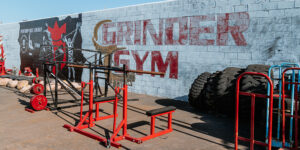 Most people blame their fitness struggles on one thing. Lack of motivation. They think they need to feel inspired, disciplined, or ready before they can… Read more: Motivation Is Not the Problem—Your Environment Is
 - Strongman Circuit Training: Building Functional Strength Across Events
 Strongman circuit training builds real, usable strength by combining heavy compound lifts, loaded movement, and anaerobic conditioning into short, intense rounds that force you to… Read more: Strongman Circuit Training: Building Functional Strength Across Events
 - You’re Not Joining a Gym—You’re Becoming Someone Who Trains
 Most people approach joining a gym with the wrong mindset. They think it’s about access: But access alone doesn’t create lasting change. Real transformation happens… Read more: You’re Not Joining a Gym—You’re Becoming Someone Who Trains
 - Strongman Log Press: Techniques to Improve Your Clean and Press
 The log press is not a shoulder exercise. It’s a full-body event disguised as an overhead lift. If you treat it like a barbell strict… Read more: Strongman Log Press: Techniques to Improve Your Clean and Press
 - Strongman Sandbag Training: Enhancing Grip and Core StrengthSandbags are one of the most versatile and effective tools in strongman training. They challenge grip, core stability, and total-body coordination while forcing the athlete… Read more: Strongman Sandbag Training: Enhancing Grip and Core Strength
- Accommodating Resistance: What It Actually Changes, Who It’s For, and How to Program It Without Getting Beat UpAccommodating resistance is one of the most misunderstood tools in strength training. It is often treated like an advanced badge of honor. Chains rattling on… Read more: Accommodating Resistance: What It Actually Changes, Who It’s For, and How to Program It Without Getting Beat Up
- I Keep Starting and Stopping the Gym—Here’s What Finally Fixed That for Good
 Most people don’t actually struggle with starting the gym. They struggle with staying. You sign up full of excitement. You go consistently for a few… Read more: I Keep Starting and Stopping the Gym—Here’s What Finally Fixed That for Good
 - The Complete Guide to Strongman TrainingStrongman training is one of the most practical, demanding, and rewarding approaches to building real-world strength. Unlike traditional gym routines that isolate muscles or prioritize… Read more: The Complete Guide to Strongman Training
- What Should You Be Looking for in a Strongman Coach?
 Choosing a strongman coach is one of the most important decisions an athlete can make. A good coach doesn’t just hand you a program. They… Read more: What Should You Be Looking for in a Strongman Coach?
 - You Don’t Feel in Shape Enough to Join a Gym Yet? – Why Waiting is Holding You Back
 This is one of the most common excuses people give for delaying their gym journey: “I need to get in shape first before I join.”… Read more: You Don’t Feel in Shape Enough to Join a Gym Yet? – Why Waiting is Holding You Back
Comments are closed