
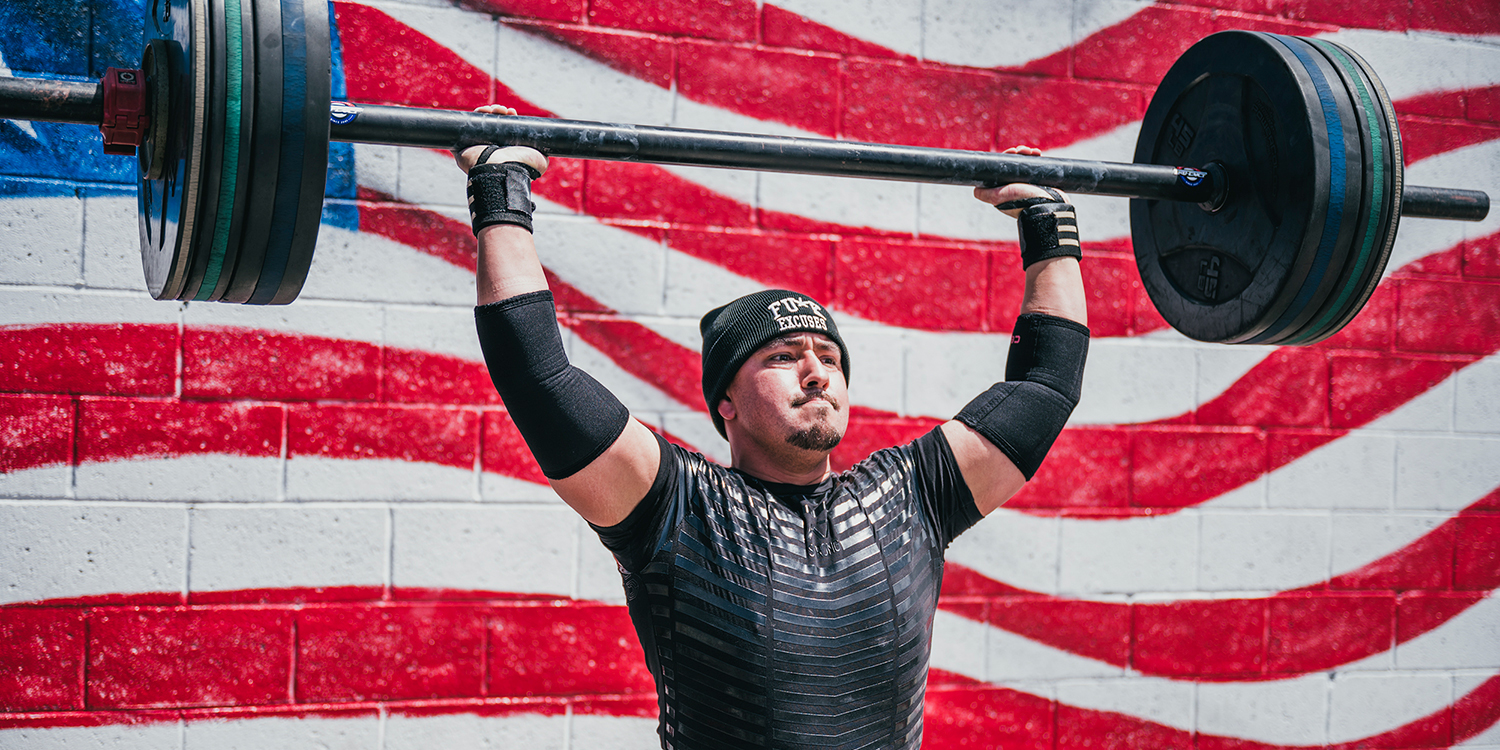
The axle press is one of the most technical and humbling events in strongman. It looks like a simple overhead lift, until you grip a thick, non-rotating bar that gives you zero whip, zero rotation, and zero forgiveness. Grip becomes a limiter. The clean turns more technical. The press demands total-body tension from the floor to lockout. Every weakness in your bracing, timing, rack position, or shoulder stability shows up immediately.
And in competition, the axle rarely shows up fresh. It comes after deadlifts, carries, loading events, and hours of cumulative fatigue. The athletes who dominate it aren’t always the strongest raw pressers. They’re the ones who stay the most organized under the bar when everything wants to fall apart. At Grinder Gym, we treat the axle press as a full-body skill that has to be built deliberately, not just loaded heavier. Here’s how to improve your overhead strength, efficiency, and consistency on the axle so you can clean, rack, and lock out heavier weights cleanly, even when you’re tired.
Why the Axle Is Different (and Why It Matters)
Unlike a standard barbell:
- The bar is thicker (usually 2 to 2.3 inches)
- There’s no sleeve rotation
- Grip fatigue builds quickly
- The clean is more demanding
- The rack position needs more upper-back tension and lat engagement
You can’t rely on bar whip or rotation to help you. You have to create the tension, the momentum, and the control yourself. That’s exactly what makes the axle one of the most powerful overhead strength builders in the sport.
1. Build a Strong Clean First
If the clean is inefficient, the press is already compromised. Axle cleans take patience, positioning, and hip timing.
Key cues:
- Treat the pull like a deadlift, not a row, and keep the bar close at all times
- Use a violent hip extension to roll it to the rack, don’t muscle it with your arms
- Lap the axle when you need to instead of forcing a direct clean
- Keep your elbows high once it reaches the chest
Drill: axle clean to rack holds. Focus only on getting to a stable rack position without pressing.
2. Create a Rock-Solid Rack Position
A poor rack kills your pressing power. What you want:
- Elbows forward and slightly up
- Chest high
- Upper back tight, with the scaps retracted
- Wrists stacked under the bar
- Core braced hard
The axle punishes a soft rack. Get organized here and the press has a chance. Skip it and the weight wins before you ever drive it up.
3. Use Leg Drive Effectively (Push Press / Push Jerk)
Most competition axle pressing is push presses or push jerks, not strict. Leg drive is the difference between grinding a weight and exploding it.
Execution:
- Small dip, straight down, with your knees tracking over your toes
- Explosive leg drive upward
- Transfer that force into the bar
- Finish with the arms
The dip should be controlled and vertical. If your knees drift forward or your torso collapses, the power leaks out. Drill: push press technique work with moderate weight, focused on speed and transfer.
4. Keep the Bar Path Tight and Vertical
The axle has to stay close and move straight up. If it drifts forward:
- The press gets harder
- The lockout slows down
- Your shoulders fatigue faster
Press straight up. Move your head back slightly, then drive it through at lockout. The cue I use: press and get your head through.
5. Grip Strength Is Non-Negotiable
The thick bar forces grip adaptation whether you like it or not. To build it:
- Train axle deadlifts
- Add static holds
- Use thick-bar accessories (Fat Gripz, Rolling Thunder)
- Include plate pinches and farmer’s carries
A stronger grip means better control in the clean, the rack, and the lockout. On the axle, grip is often the thing that fails first.
6. Train All Pressing Variations
Overhead strength improves when you develop multiple pressing patterns. Rotate through:
- Strict axle press for raw strength
- Axle push press for power transfer
- Axle push jerk for efficiency
- Axle from rack for top-end pressing strength
- Axle clean and press for full event simulation
Each variation builds a different piece of the lift.
7. Accessory Work That Transfers to the Axle
Strong axle pressers build a lot more than shoulders. The assistance work that carries over:
- Front squats and Zercher squats for rack strength
- Upper-back rows and face pulls for posture and scap stability
- Triceps work, close-grip presses and overhead extensions, for the lockout
- Ab wheel and heavy bracing work for an anti-extension core
- Farmer’s carries for grip and torso stability under load
Sample Axle-Focused Session
- Axle clean and press: 5 sets of 2 to 3 reps (moderate to heavy effort)
- Axle push press from rack: 4 sets of 4 (explosive)
- Front squats: 3 sets of 6
- Chest-supported rows: 3 sets of 10
- Ab wheel rollouts: 3 sets of 12
- Plate pinches or thick-bar holds: 3 sets for time
Common Mistakes to Avoid
- Trying to strict press everything (use leg drive when it’s allowed)
- Cleaning with the arms instead of the hips
- Letting the elbows drop in the rack
- Pressing away from the body
- Ignoring grip training
The axle exposes weaknesses fast. That’s exactly why it works so well.
How We Train the Axle at Grinder Gym
We don’t treat the axle like just another overhead day. We build it progressively:
- Clean mechanics first
- Rack stability second
- Leg drive development
- Full clean and press integration
- Timed event simulation work
Athletes learn how to stay tight, move efficiently, and press under fatigue. Because in competition, the axle rarely shows up fresh. It shows up after deadlifts, carries, and loading events. You have to be able to press when you’re tired.
More Than Shoulder Strength
The axle press isn’t just about shoulder strength. It’s about:
- Grip
- Timing
- Rack position
- Leg drive
- Full-body tension
The athletes who dominate the axle aren’t always the strongest pressers. They’re the ones who stay the most organized under the bar.
Titan Fitness Rackable Strongman Log Bar
Our strongman log bar for training the log and overhead press.
View on AmazonAs an Amazon Associate I earn from qualifying purchases.
Get a custom training plan built from our library of 900+ real exercises, matched to your goal, experience, schedule, and equipment. Free, and no signup.
Open the Workout Generator