Strength sports training programs are structured systems designed to help athletes develop the strength, technique, and conditioning required for competition. Unlike general fitness programs, these programs are built specifically around the demands of strength-based sports such as powerlifting, strongman, armwrestling, grip sport, and other strength competitions.
Athletes following a structured training program develop strength progressively over time while refining the skills required to perform at a high level in competition.
At Grinder Gym, strength sports training programs are designed to support athletes at every stage of development, from individuals learning foundational strength movements to competitors preparing for serious strength events.
Purpose of Strength Sports Training Programs
A well-designed strength sports program provides a clear path for athletic development. Rather than training randomly, athletes follow a progression that steadily builds strength while managing fatigue and recovery.
Training programs help athletes:
• Build maximal strength
• Develop technical skill in competition movements
• Improve performance consistency
• Prepare for competition
• Track long-term progress
Structured programming allows athletes to train with purpose and measure their progress over time.
Foundational Strength Development
Most strength sports programs begin by building a strong base of foundational strength. This foundation supports more advanced training and competition preparation.
Common foundational exercises include:
• Squats
• Deadlifts
• Bench Press
• Overhead Press
• Rows and pulling movements
These lifts develop the force production necessary for success in most strength sports.
Sport-Specific Training
In addition to foundational strength work, strength sports training programs include exercises that closely replicate competition movements.
Examples include:
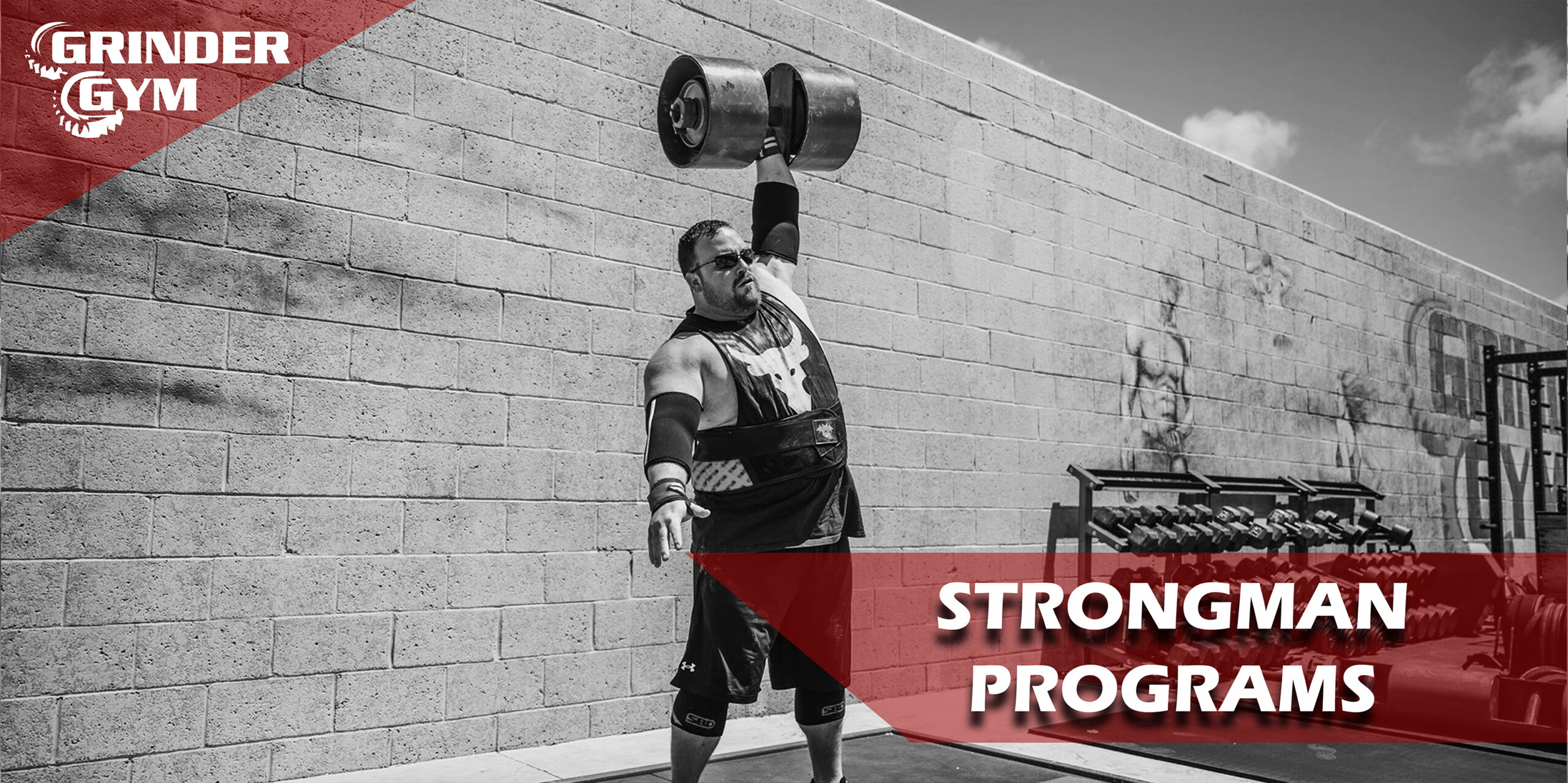
• Log press, atlas stones, and loaded carries for strongman
• Competition squat, bench press, and deadlift for powerlifting
• Thick bar lifts and pinch grip training for grip sport
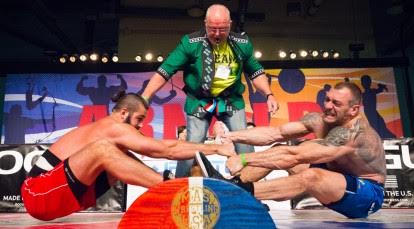
• Wrist and arm strength development for armwrestling
Sport-specific training allows athletes to refine technique and improve efficiency in the movements used during competition.
Progressive Overload
Progressive overload is the core principle behind strength development. Training programs are structured to gradually increase the demands placed on the body.
Progression may involve:
• Increasing training weight
• Increasing repetitions or sets
• Improving movement efficiency
• Increasing training frequency
Over time, these gradual increases result in significant improvements in strength and performance.
Training Phases
Strength sports programs are often divided into phases that emphasize different aspects of training.
Typical phases may include:
• Base strength development
• Volume accumulation
• Intensity progression
• Competition preparation
These phases allow athletes to develop strength while preparing their bodies for peak performance.
Recovery and Adaptation
Recovery is essential for continued strength development. Strength increases occur as the body adapts to the stress placed on it during training.
Programs typically incorporate recovery strategies such as:
• Scheduled rest days
• Deload weeks
• Mobility and recovery work
• Nutritional support
Managing fatigue allows athletes to maintain consistent progress over time.
Strength Sports Training at Grinder Gym
Grinder Gym provides structured training programs for athletes pursuing strength sports. The facility supports competitors and strength athletes through specialized equipment, coaching opportunities, and performance-focused training environments.
Athletes train for disciplines such as:
• Powerlifting
• Strongman
• Armwrestling
• Grip Sport and Armlifting
Training programs are designed to help athletes develop real strength while preparing for the demands of competition.
Long-Term Strength Development
Strength sports training programs are most effective when approached as a long-term process. Athletes who follow structured programming and train consistently tend to make the greatest improvements.
Over time, these programs help athletes develop the strength, technical ability, and confidence required to perform in strength sports competitions.
Strength is not built through random workouts. It is built through structured training, disciplined effort, and a commitment to continuous progress.

Comments are closed