
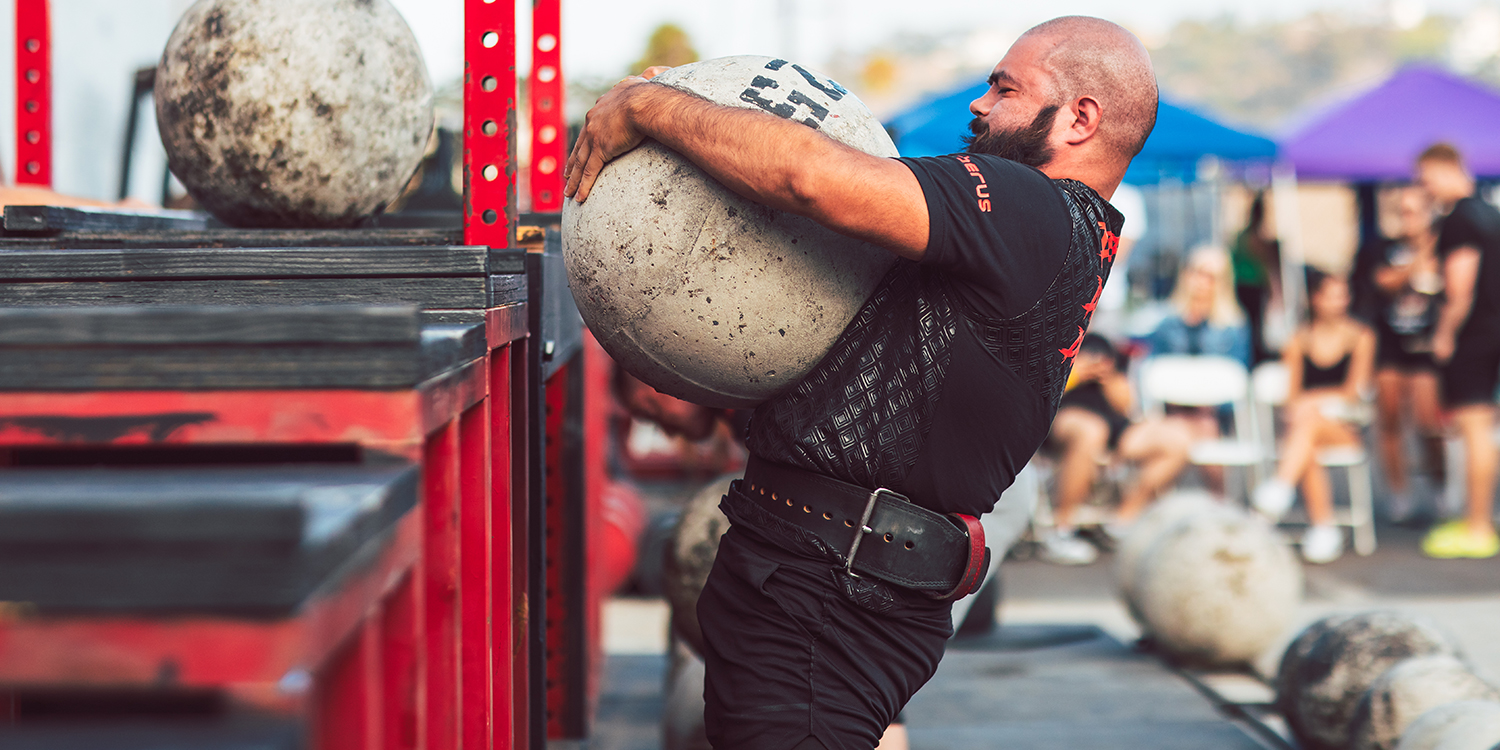
Atlas stones are one of the most recognizable and demanding events in all of strongman. They test total-body strength, coordination, positioning, and mental composure in a way almost no other lift can. Success with stones is not just about being strong enough to pick them up. It is about learning to move efficiently from the floor to the platform while you are fatigued.
The athletes who clean up their technique almost always progress faster than the ones who just try to brute-force a heavier stone.
Why Technique Matters in Atlas Stone Training
Atlas stones challenge a lot of physical qualities at the same time:
- posterior chain strength
- upper back and lat engagement
- hip extension power
- grip and forearm endurance
- core stability under load
Because the stone is round, unstable, and often tacky-dependent, small technical improvements can make a big difference in your performance and cut a ton of wasted energy.
Efficient technique lets you:
- conserve strength across multiple attempts
- move faster in timed events
- reduce your injury risk
- stay consistent under competition pressure
The Key Phases of the Atlas Stone Lift
Breaking the movement into phases makes it a lot easier to refine each part of the lift.
1) The Setup
The setup determines the whole lift.
- Stand close with your feet slightly wider than hip width
- Hinge at the hips while keeping your chest over the stone
- Wrap your arms around the stone as tightly as you can
- Pull the stone into your body before you initiate the lift
Loose positioning leads to missed lifts. Tight positioning creates leverage.
2) The First Pull (Floor to Lap)
This phase is about positioning, not speed.
- Drive through the legs
- Keep the stone close to your shins and thighs
- Use the lats to drag the stone upward
- Sit back slightly as the stone rolls into the lap
The goal is to arrive in a strong lap position, not to rush the pull.
3) The Lap Position
The lap is your reset point.
- Sit upright
- Reposition your arms higher around the stone
- Expand your chest and tighten your upper back
- Prepare for an explosive hip extension
A lot of missed lifts happen right here, because athletes rush this phase.
4) The Load
The final phase takes speed and commitment.
- Drive your hips forward aggressively
- Extend through the knees and hips at the same time
- Pull the stone up your torso with your forearms
- Guide it onto the platform or over the bar
The stone should move in one continuous path from lap to load.
Common Technique Mistakes
Athletes new to stones tend to rely purely on strength, and that leads to a predictable set of errors:
- pulling the stone away from the body
- skipping the lap position
- trying to curl the stone instead of driving the hips
- standing too upright too early
- hesitating during the load phase
Fix these and you usually see immediate improvement.
Building Strength for Atlas Stones
Stone performance climbs when you train the supporting muscles and patterns. Key supporting work includes:
- Zercher squats and carries
- front-loaded squats
- sandbag loads
- heavy rows and upper back work
- hip extension movements (deadlifts, RDLs, glute bridges)
- grip endurance training
Atlas stones reward full-body coordination, not isolated strength.
Training Atlas Stones for Competition
Competition preparation takes more than the occasional stone session. Effective prep usually includes:
- progressive loading toward contest weights
- training multiple stone heights
- timed sets and medley work
- fatigue training after your pressing or deadlift sessions
- learning tacky application and removal
Exposure builds confidence. Confidence builds performance.
The Mental Side of Stone Training
Atlas stones challenge you psychologically. The implement is intimidating. The movement is uncomfortable. The pressure to load under fatigue is real.
The improvement comes from repetition and exposure:
- practicing under time limits
- lifting with others
- simulating contest environments
- learning to commit to the load without hesitation
Technique and mindset develop together.
Where Most Athletes Improve the Fastest
Athletes tend to see the biggest gains when they:
- train stones consistently
- get real technical feedback
- practice in a competition-style environment
- build upper back and hip strength at the same time
Atlas stones reward the people who treat the event as a skill, not just a lift.
Shogun Heavy-Duty Workout Sandbag
A heavy-duty sandbag for loading, carries, and odd-object work.
View on AmazonAs an Amazon Associate I earn from qualifying purchases.
Get a custom training plan built from our library of 900+ real exercises, matched to your goal, experience, schedule, and equipment. Free, and no signup.
Open the Workout Generator