
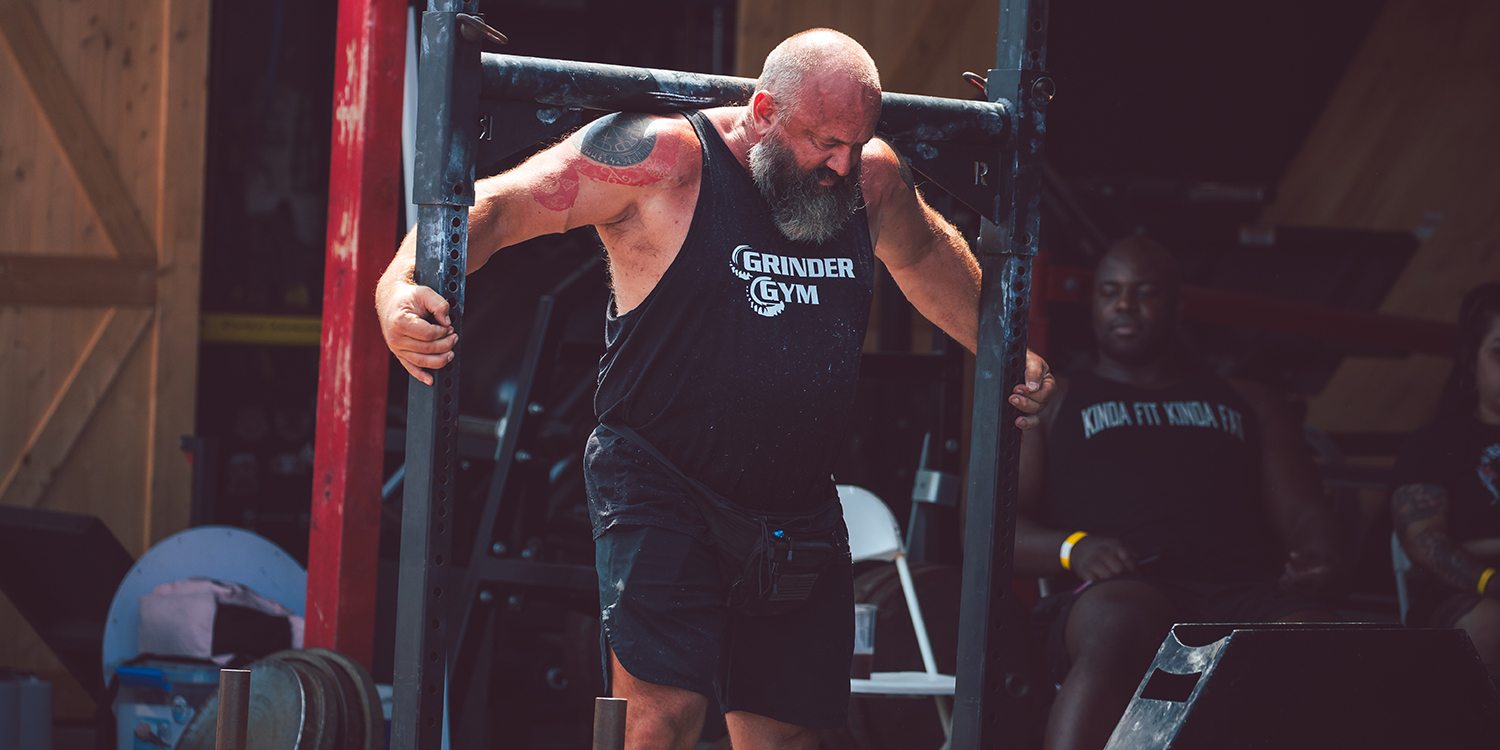
The yoke carry is one of the most demanding events in strongman, and one of the most revealing. On the surface it’s simple. Load a heavy bar across your traps and move it fast.
Under real contest weight it turns into a full-body test of bracing, breathing, footwork, shoulder packing, and composure under brutal axial load. Every weakness shows up the second you pick it. Forward collapse. Side-to-side sway. Loss of tension. Missed steps. A drop.
Here’s what I’ve watched play out: the athletes who dominate the yoke aren’t always the strongest on paper. They’re the most organized under load and the most disciplined under fatigue. Here’s how to build real stability, speed, and control on the yoke, using the same approach we use at Grinder Gym.
Get Extremely Tight Before the Pick
Treat the unrack like a max squat. Before you stand up:
- Take a deep diaphragmatic breath into the belly
- Brace hard through the entire trunk, lats, obliques, abs, lower back
- Squeeze the traps upward to create a thick shelf
- Pack the shoulders down and back once the weight is loaded
The tighter you are before the pick, the more stable the whole run becomes. Loose picks lead to shaky carries and wasted energy. Static yoke holds, light at first, are one of the best ways to build this skill. Stand under the yoke for 10 to 20 seconds and focus only on breathing and tension before you progress to movement.
Breathing Is a Skill, Not an Afterthought
Breathing under a heavy yoke is what separates an average carry from a great one. Before the pick:
- Take a massive breath and hold it as long as possible
During the run:
- If you feel pressure dropping or your vision narrowing, release just a small amount of air
- Immediately re-brace and refill
- Never dump all your air
Lose all your air and you lose your structure. Under heavy load, that usually means losing the run. Some athletes use short, controlled exhales on each step to hold pressure. Like heavy benching, breath control gets better with practice, especially during your warm-ups.
Grip and Hand Position Matter
If the implement lets you, grabbing the uprights instead of the crossbar gives you far better control and cuts down sway. When the yoke is too wide for that:
- Grip the crossbar hard
- Retract the shoulder blades
- Keep tension through the upper back
Control at the hands translates directly into stability through the entire system.
Footwork: Short, Fast, and Controlled
Yoke walking isn’t a normal stride. It’s a controlled shuffle under load. Key points:
- Stance around shoulder to hip width
- Short, choppy steps instead of long strides
- Feet staying under the hips
- Slight forward lean from the ankles, not the waist
- Heel-to-toe rhythm
Long strides slow you down and increase sway. Short steps keep you stacked and let you build speed safely. For lighter, speed-focused yokes, a staggered start can help you launch faster. Just practice it with contest-level weight before you rely on it.
Drive the Uprights Forward
Think about actively pressing the uprights forward as you move, like a standing bench press. That cue helps you:
- Maintain upper back tension
- Prevent forward collapse
- Keep momentum moving forward
When fatigue hits, this is often the thing that keeps the run intact.
Always Follow Through
Never stop at the line. Go through it. Competitors who shut down early often have to re-pick or reset, and that costs time and rhythm. Build the habit in training to carry past the finish every single time.
Accessory Work That Builds Yoke Stability
The yoke improves fastest when you train it alongside squatting and structural strength work. Key areas to develop:
- Upper back density
- Quad strength
- Single-leg stability
- Anti-extension core strength
Single-leg work is especially important. During a yoke run you’re constantly shifting load from side to side, and imbalances show up fast and raise your injury risk. Rear-foot-elevated split squats, front squats, and targeted quad work all reinforce the positions you need to stay upright. Core work that teaches you to brace under pressure, especially rollouts and anti-extension movements, translates directly into better carries.
Example Yoke-Focused Training Structure
A balanced yoke session might include:
- Moderate-heavy yoke runs for distance
- Lighter speed-focused runs
- Squat variations for structural strength
- Single-leg training for balance and stability
- Direct core bracing work
Going heavy every week leads to burnout. Rotating heavy carries with speed sessions builds both performance and durability. Track your times. Track your distances. Improvement comes from measurable progress.
Why Stability Beats Raw Strength
Heavy yoke is rarely maxed in contests. Speed, efficiency, and consistency usually decide placings. The failures usually come from:
- Soft bracing
- Weak quads
- Poor single-leg stability
- Upper back fatigue
Fix those and yoke performance jumps fast, even without adding a pound to your max strength.
How We Train the Yoke at Grinder Gym
We don’t just load the yoke and tell athletes to walk. We build stability in layers:
- Start light to groove mechanics and breathing
- Progress to loaded carries for distance and time
- Add static holds and heavy partials
- Simulate transitions between events
- Coach bracing, pacing, and footwork in real time
Because yoke success isn’t about one run. It’s about performing consistently under pressure across a full contest day.
Titan Fitness Rackable Hex / Trap Bar
The trap bar we use for deadlifts, carries, and back-friendly pulling.
View on AmazonAs an Amazon Associate I earn from qualifying purchases.
Get a custom training plan built from our library of 900+ real exercises, matched to your goal, experience, schedule, and equipment. Free, and no signup.
Open the Workout Generator