
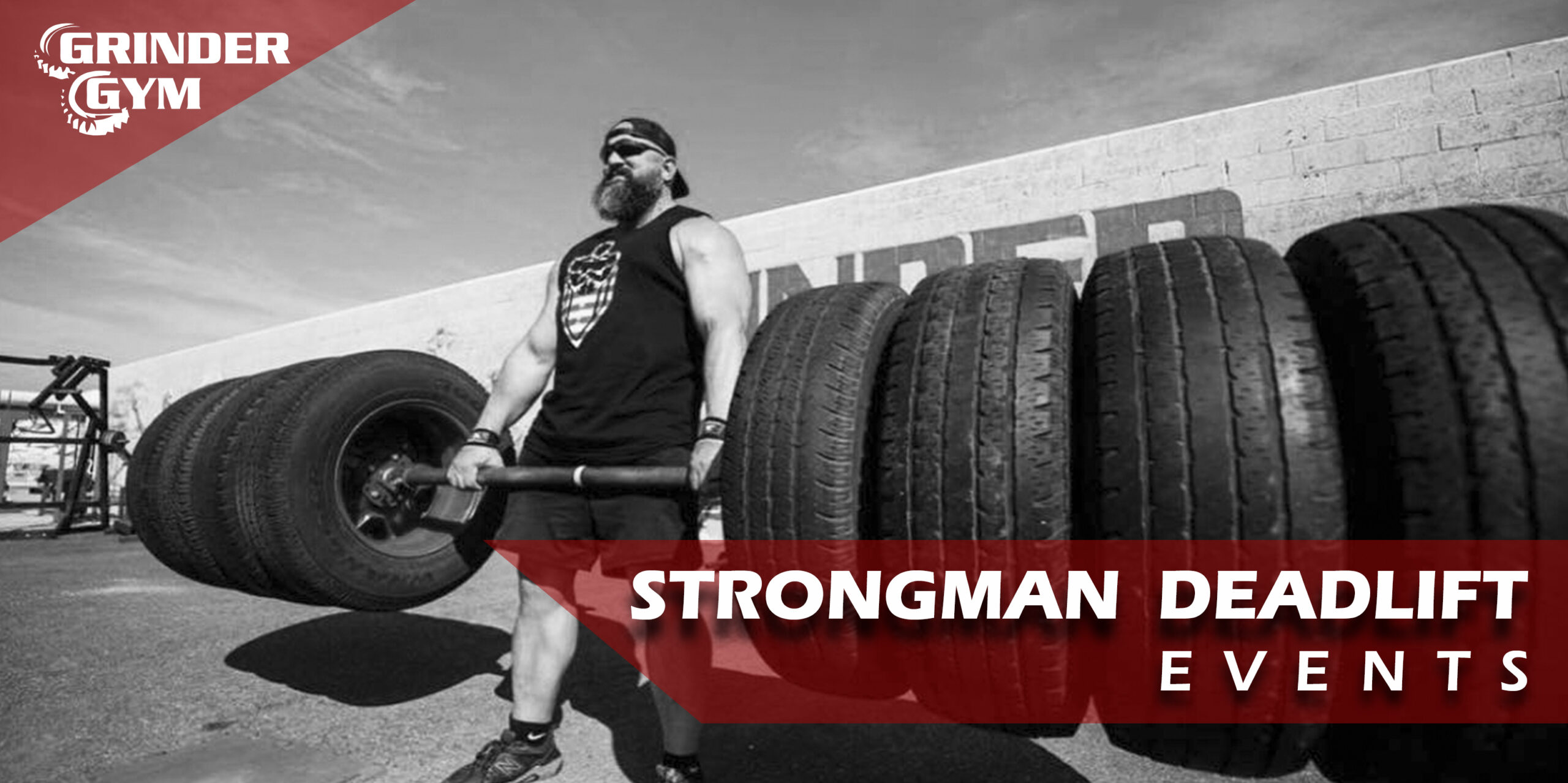
Strongman Deadlift Events are a key component of strength competitions, showcasing an athlete’s ability to lift massive weights using a variety of implements and setups. These events test maximal strength, grip endurance, and the ability to generate power through the hips and legs under demanding conditions.
Unlike traditional powerlifting deadlifts, strongman competitions feature a wide range of deadlift variations using different implements and starting heights. Athletes may lift barbells, axle bars, frames, vehicles, or specialized strongman equipment designed specifically for competition.
The height of the pull can also vary, creating different mechanical challenges. For example, tire deadlifts may range from approximately 13 to 18 inches, silver dollar deadlifts are typically performed around 18 inches, Viking deadlifts are commonly performed at 21 inches, and many strongman contests include 16 inch deadlift variations using barbells or trap bars.
Each variation emphasizes different aspects of strength, from explosive leg drive to lockout power and grip endurance. These events highlight the versatility and raw pulling power required to succeed in strongman competition.
Explore the different strongman deadlift events below to learn more about how each lift is performed and what it takes to excel in these demanding contests.
Conventional Barbell Deadlift
The Conventional Barbell Deadlift is one of the most recognizable tests of strength in strength sports. Competitors lift a loaded barbell from the ground to a fully upright standing position.
This event emphasizes raw pulling power, posterior chain strength, and proper lifting mechanics. Athletes must generate force through the legs and hips while maintaining control of the bar throughout the lift.
Axle Bar Deadlift
The Axle Bar Deadlift uses a thicker bar than a conventional barbell, which increases the difficulty by placing greater demands on grip strength.
Because axle bars do not rotate like traditional barbells, the lift becomes significantly more challenging for the hands and forearms. This event tests both the lifter’s pulling strength and their ability to maintain control of the thicker implement.
16 Inch Barbell Deadlift
The 16 Inch Barbell Deadlift is a partial-range deadlift variation where the barbell begins elevated approximately sixteen inches from the ground.
By reducing the range of motion, the event allows competitors to handle extremely heavy weights while emphasizing hip extension and lockout strength. This variation is commonly used in strongman competitions where promoters want to showcase maximal pulling strength.
16 Inch Trap Bar Deadlift
The 16 Inch Trap Bar Deadlift is performed using a trap bar positioned at an elevated height of approximately sixteen inches.
Because the athlete stands inside the implement with handles positioned at the sides, the trap bar changes the mechanics of the lift compared to a straight barbell. The movement combines elements of both a squat and a deadlift while still demanding powerful hip and leg drive.
This variation is recognized and sanctioned by the World Deadlift Council as an official deadlift event.
Viking Deadlift
The Viking Deadlift is an elevated axle bar deadlift typically performed with the bar positioned around 21 inches from the ground.
This lift uses a thick axle bar and places a strong emphasis on lockout strength and grip endurance. While the exact height used in the earliest competitions is disputed, the World Deadlift Council has established 21 inches as the standard height for the Viking Deadlift and sanctions the lift along with other deadlift variations.
Car Deadlift
In the Car Deadlift event, competitors lift the rear end of a car using a specialized frame equipped with handles.
This event tests the athlete’s ability to generate powerful leg drive while managing the balance and weight distribution of a vehicle. The unusual loading and leverage make the lift both visually dramatic and physically demanding.
[Read More...]
Silver Dollar Deadlift
The Silver Dollar Deadlift involves lifting a barbell with large container-style loading implements attached to the sleeves. Historically, these containers were filled with silver dollars, which gave the lift its name.
The containers elevate the bar to approximately 18 inches from the ground, creating a shorter range of motion that emphasizes lockout strength and bar control.
Modern versions of the event use standardized loading implements filled with calibrated plates rather than coins. The lift is recognized and sanctioned by the World Deadlift Council, which maintains official records for the event.
Frame Deadlift
The Frame Deadlift requires athletes to lift a large rectangular frame loaded with weight from the ground.
Because the athlete grips handles positioned at the sides of the frame, the movement resembles a trap bar deadlift but often involves significantly heavier loads. The frame’s size and weight demand exceptional grip strength and full-body power.
Basket Deadlift
In the Basket Deadlift event, competitors lift a weighted basket or crate from the ground to a standing position.
The uneven distribution of the load and the awkward shape of the implement challenge the athlete’s strength, balance, and coordination. This event highlights the ability to control unstable loads under heavy resistance.
Wheelbarrow Deadlift
The Wheelbarrow Deadlift involves lifting the handles of a heavily loaded wheelbarrow from the ground.
Competitors must manage both the weight and the balance of the implement while demonstrating strong pulling power and stability. Grip strength and body control are critical to successfully completing the lift.
Hummer Tire Deadlift
The Hummer Tire Deadlift is a famous strongman event where competitors lift a bar loaded with massive Hummer tires instead of traditional weight plates. The tires elevate the bar well above the ground, typically creating a starting height of roughly 15 to 16 inches.
This setup creates a partial-range deadlift that allows athletes to handle extremely heavy weights. The large tires also allow the bar to flex significantly before the entire load leaves the ground, which changes how the weight comes off the ground compared to a standard deadlift.
The event gained widespread recognition through its appearance in the Arnold Strongman Classic, where it has produced some of the heaviest deadlifts ever performed in competition.
[Read More…]
Wagon Wheel Deadlift
The Wagon Wheel Deadlift is a strongman deadlift variation performed with oversized wagon wheels attached to the ends of the bar. The large diameter of the wheels raises the bar significantly higher than a standard deadlift, typically around 15 inches from the ground.
Because the bar starts elevated, the range of motion is reduced, allowing athletes to lift heavier weights while emphasizing the lockout portion of the deadlift.
This event is often used in strongman competitions because the massive wheels create a dramatic visual while still maintaining a recognizable deadlift movement.
[Read More…]
Mammoth Bar Deadlift
The Mammoth Bar Deadlift is a strongman event performed using an extremely long and flexible barbell known as a mammoth bar. The bar is much longer than a standard barbell, which allows it to bend significantly when heavy weights are loaded.
As the athlete begins the pull, the bar flexes dramatically before the entire load leaves the ground. This bar whip creates a unique lifting experience where the weight comes off the ground progressively rather than all at once.
The Mammoth Bar Deadlift has become one of the signature events of the Arnold Strongman Classic, where it is used for maximum weight deadlift competitions.
[Read More…]
Elephant Bar Deadlift
The Elephant Bar Deadlift is another specialty deadlift variation that uses an exceptionally long and flexible barbell designed specifically for strongman competition.
The elephant bar is longer than a standard deadlift bar and allows for significant bar flex when loaded with heavy weight. As the athlete begins pulling, the bar bends considerably before the plates leave the ground.
This flex changes the mechanics of the lift and allows athletes to pull extremely heavy weights. The event is widely associated with the Arnold Strongman Classic, where the elephant bar has been used for record-setting deadlift performances.
[Read More…]
Comments are closed