
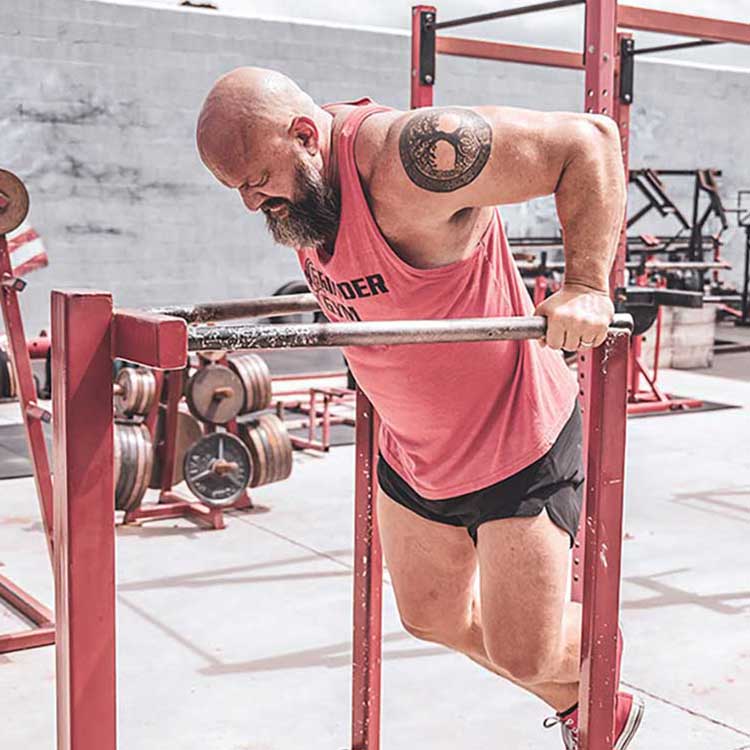
If you want to build a chest that actually grows, it helps to understand two things: what the chest is, and how it moves. Not in a textbook way. In a way that changes how you press, how you flye, and where you put the work. Once you see how the chest is built and how it loads, training it right stops being a guess.
How the Chest Is Built
The chest is mostly one muscle, the pectoralis major. Picture a big fan. The handle attaches to your upper arm bone, and the fan spreads out and anchors along your collarbone, your sternum, and the cartilage of your upper ribs.
Because it anchors in those different places, it has fibers running at different angles. The fibers off the collarbone are the upper chest. The fibers off the sternum and ribs are the mid and lower chest. They all pull on the same point on your arm, which is why the whole chest works together but different angles load different parts of it.
Underneath the pec major sits the pectoralis minor, smaller and out of sight, and along your ribs sits the serratus, those finger-like muscles that help control your shoulder blade. You do not train those directly for size, but they matter for keeping your shoulder stable and healthy while you press.
What the Chest Actually Does
Here is the part most lifters never think about. The chest’s main job is to bring your arm across your body, in toward the midline. Hug someone, throw a hook, squeeze your hands together in front of you, that is the chest working.
That changes how you should think about a bench press. You do not press with your chest. You press with your chest, your front delts, and your triceps as a team, and the chest’s share of the job is bringing your upper arms in and together. The bar going up is the result. The chest moving your arms toward the midline is the work.
Once you get that, you understand both why pressing builds the chest and why pressing alone is not enough.
Why Pressing Alone Leaves Size on the Table
When you bench, the chest does the most work down low and through the middle, where your arms are out wide and traveling in. Near the top, as your arms straighten and come together over your chest, the triceps and front delts take over and the chest has already done most of its job.
So a heavy press builds real strength and real mass, but the chest only gets full, hard tension through part of the movement. If pressing is all you do, you train the chest hard in one zone and barely load it where it can grow the most. That zone is the stretch.
The Stretch Is Where the Chest Grows
Muscle grows best when it is loaded in a lengthened position, when it is stretched and under tension at the same time. For the chest, that is the bottom of a deep flye or a deep press, where your arms are out and slightly back and you can feel the chest pulled long across your shoulders.
That stretched, loaded position is one of the strongest growth signals you can give a muscle. It is also the position most lifters rush through. They drop fast, bounce out of the bottom, and never actually let the chest load in the stretch. Then they squeeze hard at the top, which feels like working the chest but does far less for size than owning the bottom.
You load the stretch on purpose with deep dumbbell flyes, deep dumbbell presses, and cable flyes taken to a full stretch, with a controlled way down and a pause at the bottom before you drive back. That is where the chest is asked to produce force at its longest length, and that is where it answers with size.
What This Means for Your Training
You do not need to overhaul anything. You need to train the chest the way it is actually built and the way it actually moves.
- Press for strength and mass, but go deep and controlled. No bouncing. Lower with intent and feel the chest load before you drive.
- Add a real stretch movement every chest session. A deep flye or deep press, paused in the bottom, where the chest is long and loaded.
- Do not trade the stretch for the squeeze. The squeeze at the top feels good, but the stretch at the bottom is doing more for growth.
- Use the angle to bias the region you want. Incline for the upper chest, flat for the mid, a downward angle for the lower.
- Set your shoulder blades and keep your chest up. Pull the shoulders back and down and stay tight so the chest takes the load instead of handing it to the front of your shoulder.
The Grinder Gym Way
This is the thinking behind the Grinder Gym Chest Training Manual. Train the chest where it is most loaded, own the stretch on every session, and bias the angle for the region that needs it, all programmed across three phases that build the chest up instead of just pushing weight.
Understand how the chest is built and how it loads, train it that way, and the size follows. That is the whole game.
Build a Fuller, Thicker Chest
Stop building a flat, bottom-heavy chest. Our Chest Training Manual prioritizes the upper chest and the stretch where the chest actually grows, the way we train it at Grinder Gym. Join the test group and the waitlist now.
Get the Chest Training Manual ›