
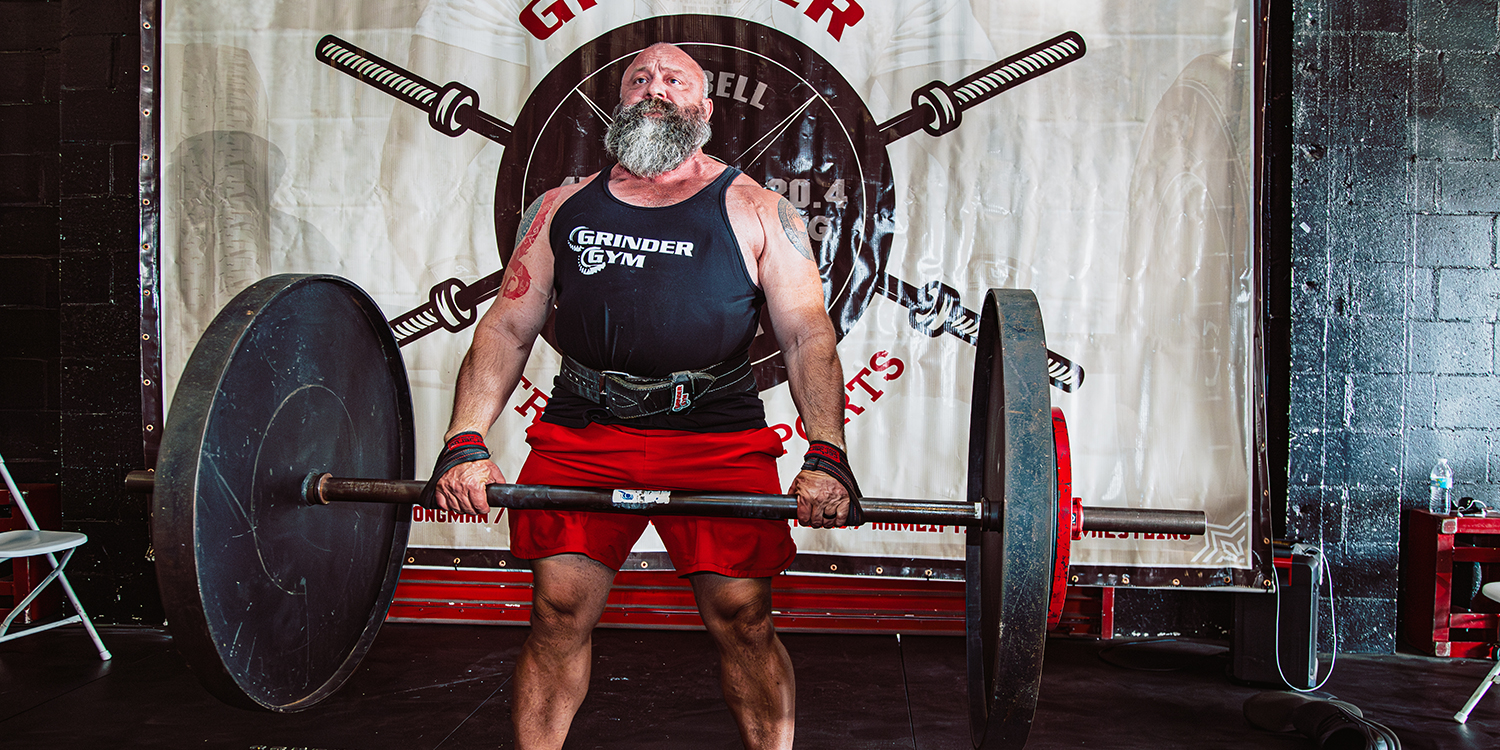
The Viking Deadlift is a strongman-style deadlift variation performed with an axle bar set at an elevated height, typically between 21 and 24 inches from the ground. Unlike a conventional deadlift where the bar begins on the floor, the Viking Deadlift starts from a higher position, reducing the range of motion while still demanding tremendous pulling strength.
The lift is performed using a thick axle bar rather than a standard barbell, which increases the challenge to the hands and grip. Because the bar begins higher than a traditional deadlift, athletes are often able to lift significantly heavier weights, making the event an impressive test of maximal strength.
The Viking Deadlift has been featured in strength competitions and exhibitions as a way to test powerful hip extension, grip strength, and lockout ability.
What this Lift is
The Viking Deadlift is a partial-range deadlift performed with an axle bar positioned at an elevated starting height. The bar is typically set between 21 and 24 inches from the ground depending on the event setup.
Unlike traditional barbell deadlifts, the axle bar used in this lift has a thicker diameter and does not rotate, which increases the difficulty of maintaining a secure grip.
Key characteristics of the lift include:
- The lift is performed using a thick axle bar.
- The starting height of the bar is elevated above the floor.
- The standard competition height is 21 inches.
- The athlete lifts the bar to a fully upright standing position.
- The lift emphasizes hip extension, grip strength, and lockout power.
Because the bar begins higher than a conventional deadlift, the movement places more emphasis on the upper portion of the pull.
History of the Lift
The exact origin of the Viking Deadlift and the precise bar height used in the earliest competitions is disputed. Early strongman-style exhibitions and strength contests used various elevated deadlift formats to allow extremely heavy weights to be lifted while still maintaining a recognizable pulling movement.
Over time, the Viking Deadlift became associated with axle bar deadlift variations performed from an elevated starting position.
The World Deadlift Council has played an important role in formalizing the lift by establishing sanctioning standards for several deadlift variations. The organization has set the official Viking Deadlift bar height at 21 inches, helping create a consistent standard for competitions recognizing the lift.
Use of this Lift in Competition
The Viking Deadlift is used in strength competitions where athletes attempt to demonstrate maximal pulling strength with an axle bar.
The lift may appear in several competition formats:
- Max weight events where athletes attempt progressively heavier lifts.
- Repetition events where athletes perform as many lifts as possible within a time limit.
- Strength exhibitions that showcase heavy axle bar pulling strength.
Because the lift uses a thick axle bar, it often becomes both a test of pulling power and grip endurance.
Standard Competition Rules
Competition rules can vary depending on the organization hosting the event, but commonly accepted standards follow the guidelines established by the World Deadlift Council.
Typical rules include:
- The axle bar must begin at a height of 21 inches from the ground.
- The athlete must lift the bar to a fully upright standing position.
- The hips and knees must be locked out at the completion of the lift.
- The shoulders must be positioned upright with the bar under control.
- The bar must be lowered under control after the lift.
Some competitions allow lifting straps when performing axle deadlift variations, while others may restrict certain equipment depending on the rules of the event.
Equipment Used in This Lift
Several pieces of equipment are used when setting up a Viking Deadlift.
Typical equipment includes:
- A thick axle bar that does not rotate.
- Elevated pulling blocks or platforms used to set the bar height.
- Large diameter weight plates.
- Chalk to improve grip security.
- Lifting straps if allowed by competition rules.
The axle bar itself is a defining feature of this lift because its thickness and lack of rotation significantly increase the grip challenge.
Related Training Exercises
This page describes the Viking Deadlift as a competition lift. For instruction on how to train for this movement safely and effectively, explore the related exercise and training guides.
Related articles may include:
- Axle bar deadlift technique.
- Conventional barbell deadlift training.
- Partial range deadlift variations.
- Grip strength development for axle lifts.
These resources focus on preparing athletes to perform heavy pulling movements safely.
Related Equipment
Several pieces of equipment are commonly used when training for Viking Deadlift events.
Related equipment may include:
- Axle bars.
- Pulling blocks.
- Deadlift platforms.
- Grip training tools.
- Strongman lifting straps.
These equipment guides provide additional information about tools used in heavy pulling training.
Train Deadlift Variations at Grinder Gym
Grinder Gym provides athletes with the equipment and environment needed to train heavy deadlift variations used in strength sports.
Athletes preparing for strongman competitions or strength challenges can train with specialized bars, implements, and coaching support designed for serious strength development.
Start here:
Grinder Gym
San Diego, California
Where serious athletes train to lift heavier and build real strength.
Comments are closed