
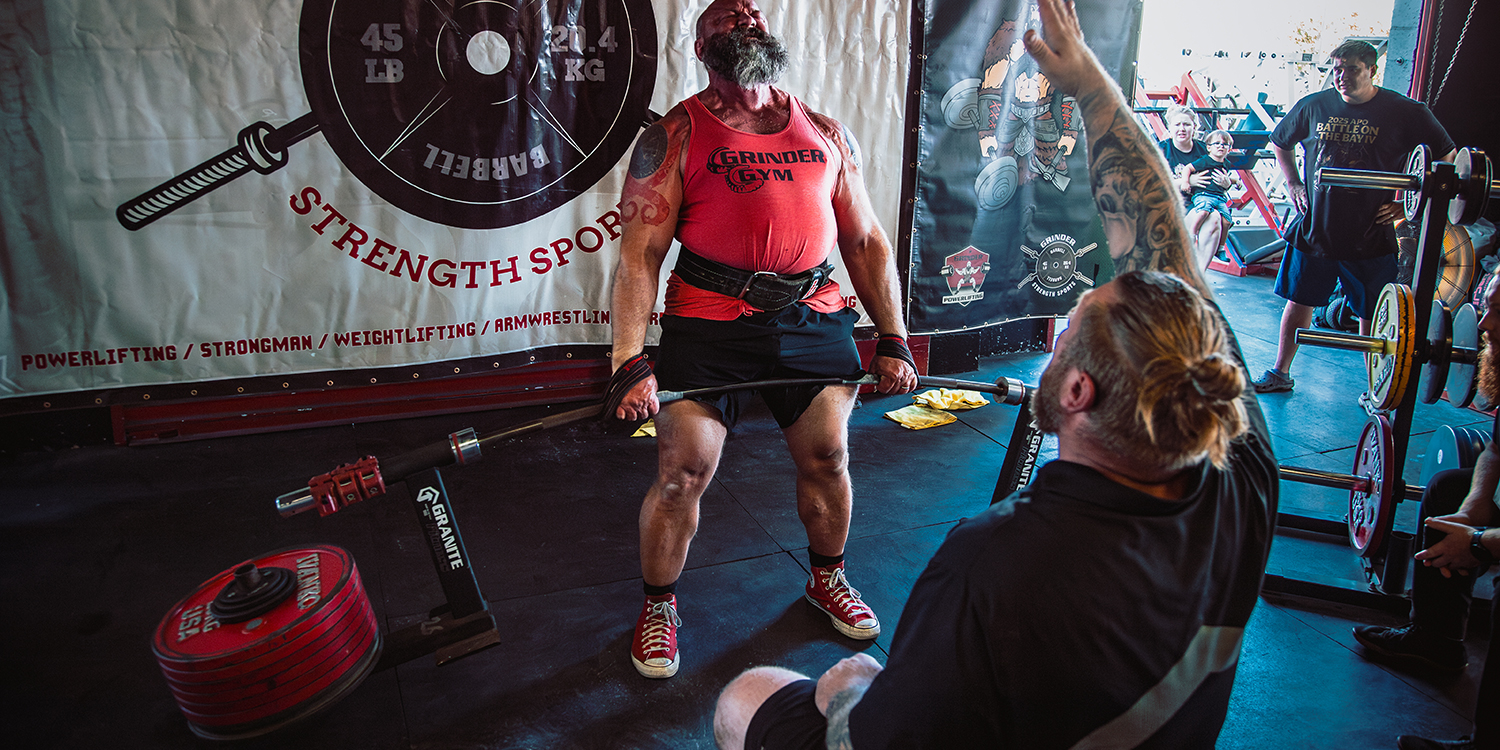
The Silver Dollar Deadlift is a historic strongman deadlift variation performed with a standard barbell attached to large container-style loading implements that elevate the weight above the floor. The lift takes its name from early strength exhibitions where the containers were filled with silver dollars, creating both the load and the elevated starting position.
Because the containers suspend the load well above the ground, the bar begins at a height significantly higher than a conventional deadlift. This creates a partial-range pull that emphasizes the upper portion of the deadlift and allows extremely heavy weights to be lifted.
One of the defining characteristics of the Silver Dollar Deadlift is the significant flex of the barbell during the lift. As the athlete begins pulling, the bar bends dramatically before the containers fully leave the ground. This bar bend changes how the weight comes off the ground and is considered an important part of the event.
The lift is recognized and sanctioned by the World Deadlift Council, which maintains official records for the Silver Dollar Deadlift and other deadlift variations.
What this Lift is
The Silver Dollar Deadlift is a partial-range deadlift performed with a barbell connected to large containers or loading implements that hold the weight.
These containers elevate the bar well above the floor, typically around 18 inches from the ground, which is approximately double the starting height of a standard deadlift.
Key characteristics of the lift include:
- The lift is performed with a standard barbell rather than an axle bar.
- The weight is loaded into large container-style implements attached to the bar.
- The containers elevate the bar significantly above the floor.
- The barbell bends noticeably before the entire load leaves the ground.
- The lift emphasizes lockout strength and posterior chain power.
Because the bar flexes before the full weight leaves the ground, athletes experience a gradual loading effect that differs from traditional deadlift variations.
History of the Lift
The Silver Dollar Deadlift originated in early twentieth-century strength exhibitions. One of the most famous strongmen associated with the lift was Hermann Goerner, who demonstrated extraordinary deadlifting strength using variations of the event.
In the original format, wooden boxes attached to the barbell sleeves were filled with silver dollars, which served both as the load and the elevated support structure for the lift. The visual of massive containers filled with coins made the event a memorable demonstration of strength.
Over time, the lift became part of the evolving tradition of strongman contests. While the original version used actual silver coins, modern competitions no longer use loose currency.
Today, standardized loading implements are used that hold calibrated weight plates, allowing event promoters to measure weight accurately while preserving the elevated container-style design that defines the lift.
Use of this Lift in Competition
The Silver Dollar Deadlift is used in strongman competitions and strength exhibitions where the goal is to test maximal pulling strength with extremely heavy loads.
The lift may appear in several competition formats:
- Maximum weight events where athletes attempt progressively heavier lifts.
- Rising bar events where the weight increases between rounds.
- Repetition events where athletes perform as many lifts as possible within a time limit.
Because of the elevated starting height and the flexing barbell, athletes are often able to lift significantly heavier weights than they would in a conventional deadlift.
The lift is formally recognized by the World Deadlift Council, which sanctions the event and maintains official records.
Standard Competition Rules
Rules may vary slightly between competitions, but most Silver Dollar Deadlift events follow similar judging standards.
Common rules include:
- The athlete must lift the bar from the elevated starting position to a fully upright standing stance.
- The hips and knees must be locked out at the completion of the lift.
- The shoulders must be upright with the bar under control.
- The athlete must wait for the judge’s signal before lowering the bar.
Some competitions allow hitching due to the extremely heavy loads involved. Lifting straps are commonly permitted, while substances such as tacky are typically prohibited.
Event promoters may adjust specific rules depending on the competition format.
Equipment Used in this Lift
The Silver Dollar Deadlift requires specialized equipment designed to replicate the large containers originally used to hold silver coins.
Typical equipment includes:
- A standard barbell used as the lifting implement.
- Large container-style loading implements attached to the barbell sleeves.
- Calibrated weight plates loaded into the containers.
- Chalk to improve grip security during heavy pulls.
- Lifting straps when permitted by competition rules.
The extended loading structure allows the barbell to bend significantly during the lift, which is a defining mechanical feature of the event.
Related Training Exercises
This page describes the Silver Dollar Deadlift as a competition lift. For instruction on how to train deadlift variations safely and effectively, explore the related exercise and technique guides.
Related articles may include:
- Conventional barbell deadlift technique
- Deadlift lockout strength development
- Partial range deadlift variations
- Strongman deadlift programming
These resources focus on preparing athletes to perform heavy pulling movements safely.
Related Equipment
Several pieces of equipment are commonly used when preparing for heavy deadlift variations.
Related equipment may include:
- Deadlift bars
- Pulling blocks
- Lifting platforms
- Strongman straps
- Grip training tools
These equipment guides provide additional insight into the tools used for heavy pulling training.
Train Strongman Lifts at Grinder Gym
Grinder Gym provides athletes with the equipment and environment needed to train heavy deadlift variations used in strongman competitions and strength events.
Athletes preparing for competition can train with specialized implements, experienced coaching, and facilities designed for serious strength development.
Start here:
Grinder Gym
San Diego, California
Where serious athletes train to lift heavier and build real strength.
Comments are closed