
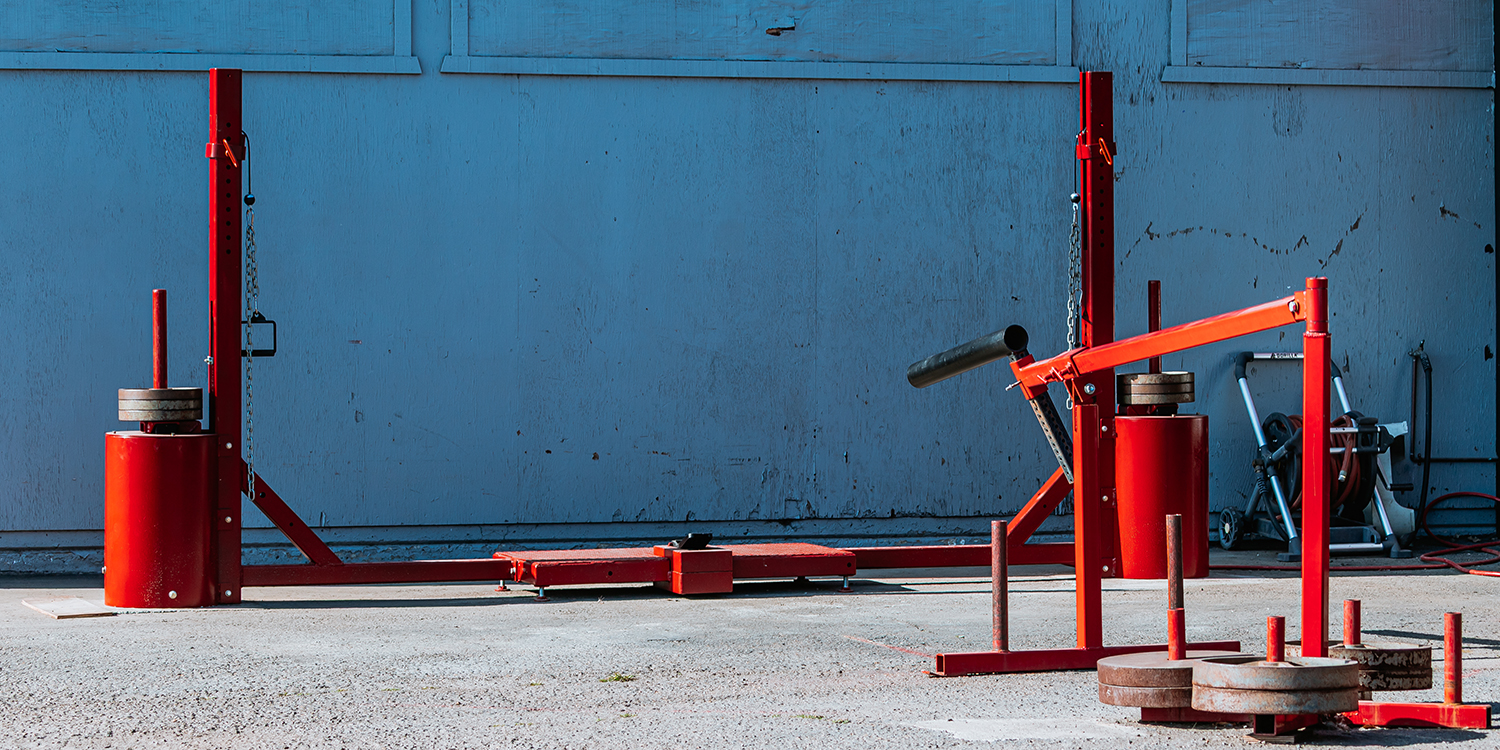
The Essential Tools for Building Real-World Strength at Grinder Gym
Strongman training isn’t built around machines, mirrors, or perfectly balanced barbells. It’s built around awkward objects, unstable loads, and the kind of total-body strength that holds up when everything’s trying to go wrong.
You don’t need a full competition yard to get started. But if you’re serious about progressing in strongman, certain tools show up over and over in the environments that produce capable, confident athletes.
These aren’t luxury items. They’re the foundational pieces that build the grip, bracing, power, and resilience the sport demands. Here are the ten pieces of equipment every strongman should train with, and why they matter.
1. Log Bar
The log is one of the defining implements in strongman. It forces full-body coordination from the floor to overhead while teaching:
- Overhead power
- Clean mechanics
- Upper back stability
- Core bracing under awkward loads
Unlike a standard barbell, the log’s diameter and rack position demand tighter technique and more trunk control.
2. Axle Bar
A thick, non-rotating axle changes everything about grip and control. It builds:
- Crushing grip strength
- Pulling power without bar rotation
- Overhead stability
Deadlifts, cleans, and presses on an axle teach you to stay tight when the implement gives you no help.
3. Atlas Stones (or Natural Stones)
Nothing builds raw, real-world strength like lifting something round and uncooperative. Stones develop:
- Posterior chain explosion
- Trunk rigidity
- Lap and load mechanics
- Mental toughness under max strain
They’re one of the most direct transfers to competition performance.
4. Farmer’s Handles
Simple, brutal, and incredibly effective. Farmer’s walks build:
- Grip endurance
- Shoulder stability
- Core control while moving
- Full-body conditioning under load
They expose weaknesses fast and build resilience that carries over everywhere.
5. Yoke
Few implements teach bracing and structural strength like a yoke. It develops:
- Upper back density
- Axial loading tolerance
- Stability under heavy weight
- Movement efficiency
You learn to move heavy loads without collapsing forward.
6. Sandbags
One of the most versatile strongman tools, especially for beginners and home training. Sandbags train:
- Grip strength
- Front-loaded bracing
- Loading and carrying patterns
- Conditioning
The shifting load forces constant adjustment and core engagement.
7. Sled (Push or Drag)
Conditioning is non-negotiable in strongman. Sled work builds:
- Work capacity
- Leg drive
- Recovery between efforts
- Mental toughness
It lets you train high output with low joint impact, which is perfect for building event-day stamina.
8. Deadlift Variations (Blocks, Frames, Specialty Bars)
Strongman rarely uses a standard competition deadlift. Training variations include:
- Block pulls
- Frame deadlifts
- Silver dollar setups
- Trap bars
These prepare you for the changing pulling mechanics you’ll face in contests.
9. Grip Tools
Grip ends more events than raw strength does. Essential tools include:
- Thick handles
- Rolling handles
- Grippers
- Deadlift hold setups
Dedicated grip work makes sure you don’t lose events simply because you couldn’t hold on.
10. Loading Implements (Kegs, Husafell Stones, Blocks, Odd Objects)
Loading events are staples in most competitions. Implements like kegs, Husafell stones, blocks, and odd objects teach:
- Lap strength
- Hip extension
- Full-body coordination under fatigue
They force efficient movement when everything is trying to work against you.
You Don’t Need Everything, You Need Exposure
Beginners often think they have to own every piece of equipment before they start strongman. That’s not true. What you actually need is:
- Consistent exposure to the implements
- Proper coaching on technique and progression
- Progressive loading in a structured plan
- Repetition under guidance
The environment matters more than the equipment list. Training around people who understand strongman accelerates your progress far faster than collecting gear with no direction.
Where Equipment Meets Execution
Equipment alone doesn’t build strongman athletes. Structure does. Coaching does. Experience does. At Grinder Gym, athletes train with real strongman implements and learn how to use them properly, whether they’re prepping for a first novice contest or pushing toward higher-level competition. We focus on:
- Safe technique from day one
- Event-specific progression
- Energy management and recovery
- Full-day simulation training
REP Fitness Farmer Walk Handles
Farmer walk handles for grip, carries, and full-body strength.
View on AmazonAs an Amazon Associate I earn from qualifying purchases.
Get a custom training plan built from our library of 900+ real exercises, matched to your goal, experience, schedule, and equipment. Free, and no signup.
Open the Workout Generator