
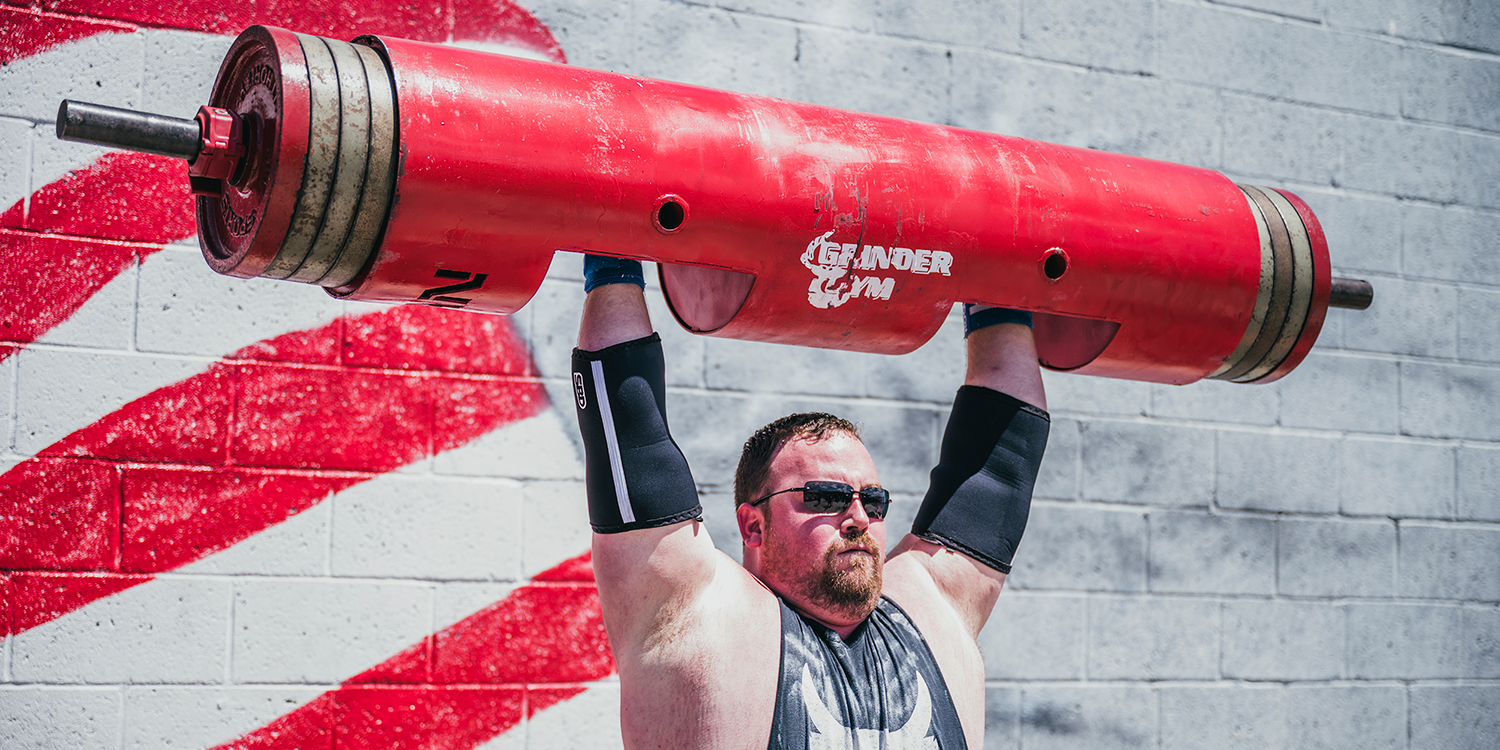
Do you want to train for a strongman contest?
Or do you enjoy strongman-style training but aren’t sure how to approach it because you don’t have access to specialty equipment?
This is one of the most common barriers people face when entering the sport.
Strongman is known for implements such as:
- Log presses
- Atlas stones
- Yokes
- Axle bars
- Farmer’s handles
These tools are rarely found in most commercial gyms.
But the reality is that strongman development does not start with equipment.
It starts with structure.
At its core, strongman training focuses on:
- Building usable strength
- Learning effective movement patterns
- Preparing the body for awkward loads
- Developing resilience for varied and unpredictable demands
The equipment enhances the process, but it does not define it.
Strongman Training Starts With Principles, Not Implements
Before touching event equipment, athletes must develop several foundational qualities:
- Foundational strength
- Midline stability
- Grip strength
- Work capacity
- Movement efficiency under load
These qualities can be developed at any gym and with a wide range of tools.
Foundational movements include:
- Deadlifts
- Front-loaded squats
- Carries
- Overhead presses
- Rows and pulling movements
- Conditioning work
When programmed correctly, these exercises translate directly into strongman performance.
Training Without Strongman Equipment
Athletes without access to a strongman facility can still prepare effectively.
Training can be built around common gym equipment such as:
- Barbells and dumbbells for pressing and pulling strength
- Sandbags or heavy bags for loading and carries
- Trap bars and farmer-style handles for grip and movement work
- Sled pushes and sled drags for conditioning and leg drive
- Core and bracing exercises for load transfer
Strongman preparation is not about perfectly replicating events every session.
It is about preparing the body for the demands those events create.
Structured programming bridges the gap between general strength training and event readiness.
Training With Access to Strongman Equipment
When specialty equipment becomes available, athletes can begin integrating event-specific training such as:
- Log press technique
- Axle bar pressing and pulling
- Atlas stone loading
- Yoke carries and movement mechanics
- Event medleys and transitions
- Pacing across multiple efforts
Exposure to implements develops:
- Familiarity
- Confidence
- Efficiency
These factors become extremely important on competition day.
The key is not simply touching the equipment.
The key is knowing how and when to use it within a structured training plan.
Programming Matters More Than Equipment Access
Strongman progress comes from consistent and structured training principles:
- Progressive overload
- Smart event rotation
- Managing fatigue and recovery
- Addressing weaknesses
- Preparing for competition timelines
Random heavy lifting will only take an athlete so far.
Structured programming ensures every training session contributes to long-term performance.
Athletes train with direction rather than guessing.
They understand why each movement is included and how it connects to future events.
Strongman Training Can Be Scaled to Any Level
Strongman training is highly adaptable.
Programs can be designed for:
- Complete beginners
- General strength enthusiasts
- Competitive strongman athletes
- Masters athletes
- Weight-class competitors
Every athlete starts somewhere.
The goal is not to train like a professional on day one.
The goal is to build the capacity to handle more over time.
Guidance Makes the Difference
Whether someone is preparing for their first contest or simply looking to train with more purpose, coaching provides valuable structure.
Guidance helps athletes develop:
- Training structure
- Accountability
- Technical instruction
- Long-term progression planning
- Competition preparation
With the right guidance, strongman training becomes accessible regardless of:
- Equipment access
- Experience level
- Starting point
Athletes do not need to wait until they feel ready.
They need to start learning the process.
Learn Strongman the Right Way
The fastest way to understand strongman training is through hands-on exposure to the events and equipment.
Grinder Gym Strongman Workshops introduce athletes to the tools, techniques, and training methods used in the sport.
During a workshop you will learn:
- How to approach strongman implements safely
- How to perform carries, presses, and loading events
- How competition-style events are structured
- How to build strongman training into your weekly programming
Whether you are brand new to the sport or looking to refine your event skills, these workshops give you direct exposure to strongman training in a structured environment.
- Train with the implements
- Learn the movements
- Build real-world strength
Join an upcoming Grinder Gym Strongman Workshop and experience strongman training the way it is meant to be done.